

Industry Insights & Practices
Trends · Experience · Action
Practical notes on industrial AI, data value, and smart manufacturing—methods and field experience to help data grow into intelligence.
Industry Insights & Practices
No matching insights. Try another category or keyword.
 Jiuze Perspectives
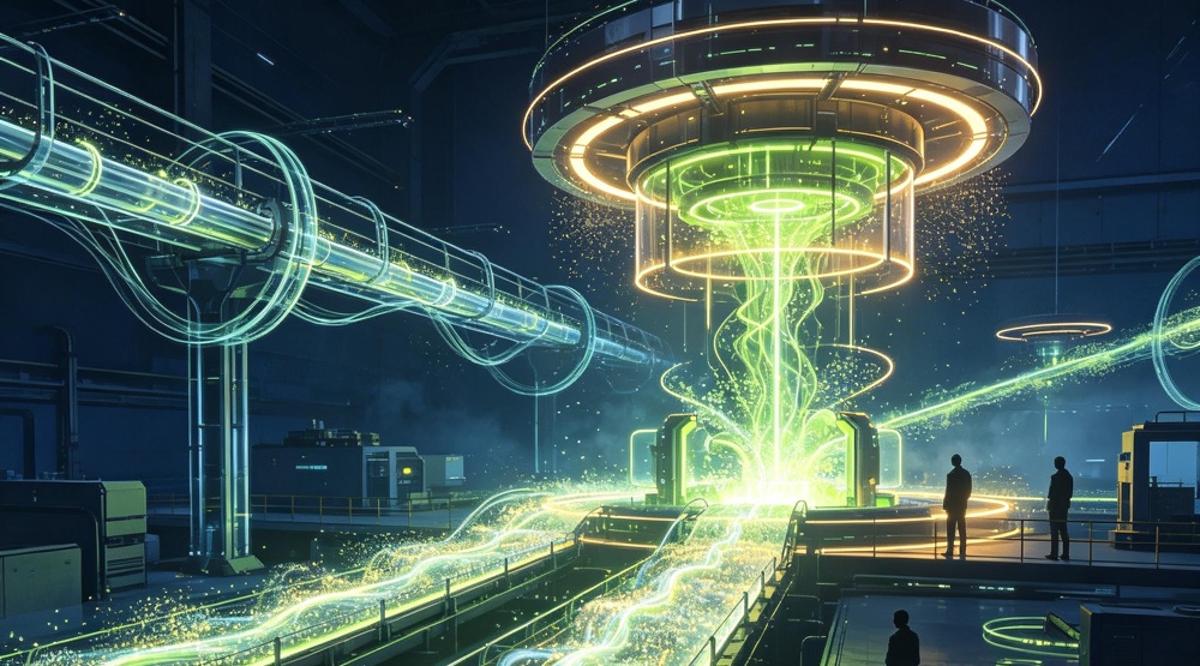
Why is industrial software getting "smaller"?
Why is industrial software shifting from "big and comprehensive" to "small and specialized"? The 2026 Guidelines for "Small, Fast, Light, Precise" Digital Products signal that future software value lies not in feature count, but in solving one specific problem. Software can get smaller, yet industry know-how runs deeper. #IndustrialSoftware #DigitalTransformation #SmartManufacturing
 Industry Trends
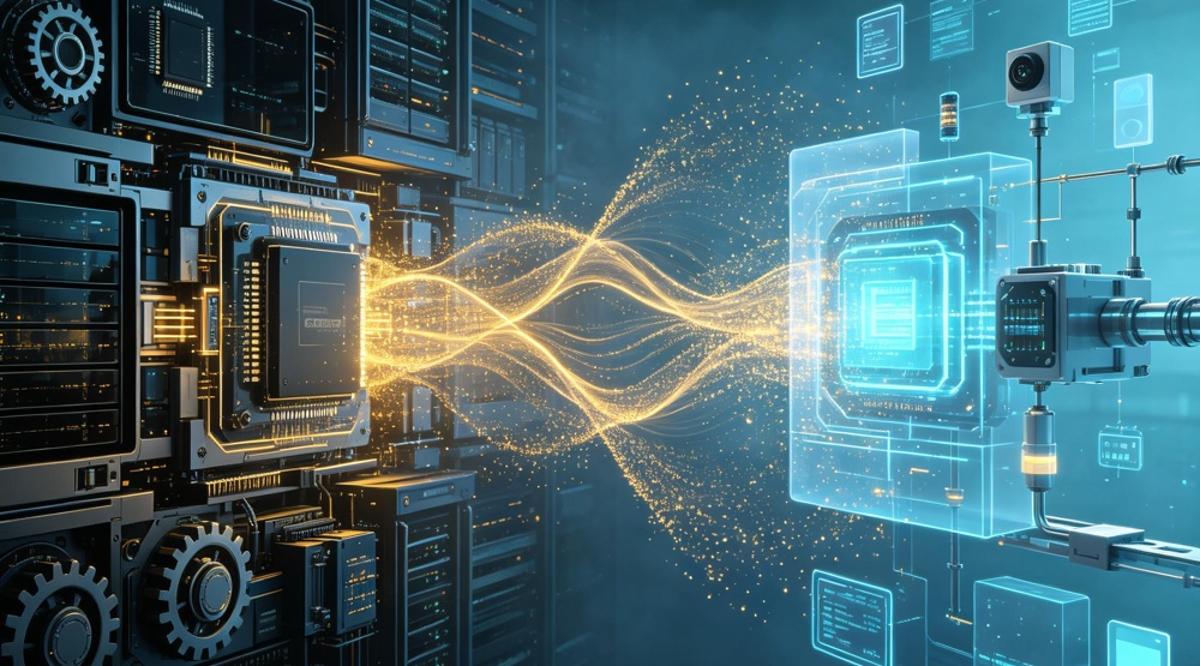
AI真正淘汰的,可能不是职业,而是劳动
What AI truly disrupts may not be any single job, but "labor" itself. When knowledge, skills, and execution can all be called upon by AI, "being able to do the work" is becoming less scarce. What matters most may not be how much you can do, but whether you can decide what's worth doing, why, and how much to let AI do for you. #AIEra #AIJobs #FutureOfWork #TechTrends
 Jiuze Perspectives
Why are small and medium-sized enterprises afraid of digitalization?
SMEs dread digitalization due to lengthy, rigid implementations that can't keep up with business changes. New "small, fast, light, precise" policy shifts focus: solve one concrete problem first, deploy quickly, minimize complexity, and quantify ROI. Digitalization evolves from "big projects" to "problem-solving tools."
 Smart Manufacturing
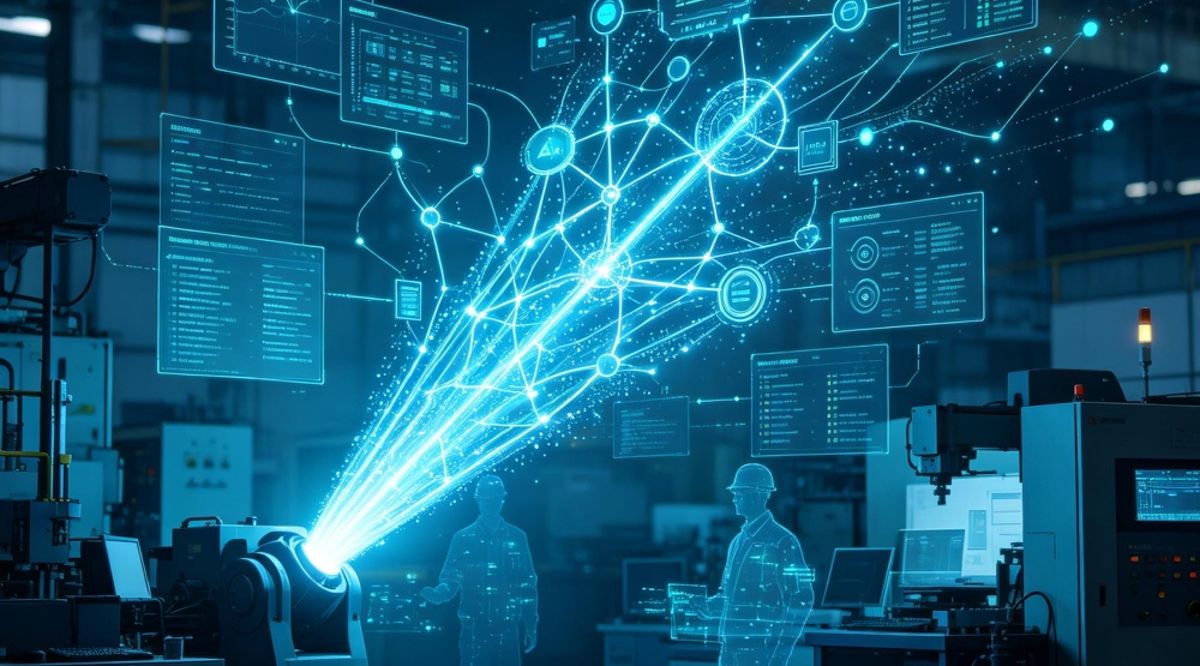
Less than 1%! NVIDIA's H200 returns to China — yet reveals a major underlying trend.
 Smart Manufacturing
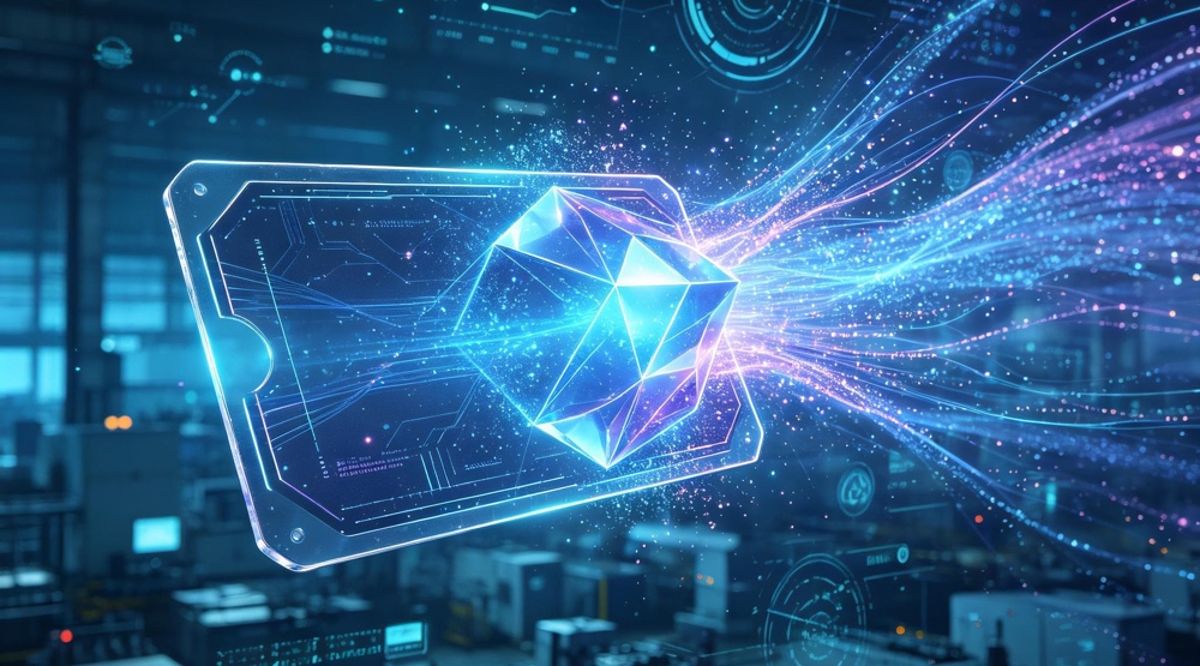
China's industrial software landscape has changed: global giants are now "rewriting" their products for China.
AVEVA rewrites HMI 2026 for China, signaling shift from "localization" to "product restructuring" in industrial software. Key changes: adapt to domestic ecosystem, match Chinese engineers' workflows, ensure cross-platform consistency. Competition now hinges on understanding China's industrial reality; local practices may reshape global software design.
 Smart Manufacturing
¥250M for a MOM firm! What's an IP company really buying? Customers, data, and industrial
Why would an intellectual property company spend ¥250M to acquire a MOM software firm? This is no simple cross-sector deal. In the AI era, the real value of industrial software is shifting from "features" to customers, scenarios, data, and industrial capabilities. The value of industrial software is being redefined. #IndustrialSoftware #IndustrialAI #MES #MOM #SmartManufacturing
 Industry Trends
MIIT unveils 24 innovation tasks — machines are starting to understand industry
MIIT launches 2026 "Open Bidding" for innovation, focusing on embodied intelligence and on-device world models. Beyond AI/robotics competition, this signals a deeper manufacturing shift: future factory edge isn't machine count, but who enables machines to learn, perceive, and decide autonomously. Industry is evolving from automation to cognition. #IndustrialAI #SmartManufacturing #EmbodiedIntellig
 Industry Trends
Industrial software — no longer selling licenses?
What AI may be transforming is not just the functionality of industrial software, but its entire business model: from licenses to subscriptions, from platforms to agents, and onward to tokens, tasks, and even outcomes. In the future, industrial software may no longer sell "software usage rights" — it will sell the productivity that AI creates. #IndustrialSoftware #IndustrialAI #AIAgents #Industria
 Industry Trends
Swapping out a PLC is easy — replacing the software is the hard part.
Domestic PLCs are entering a phase where "hardware is easy to replace, but software is getting harder to replace by the day." What truly determines whether substitution can be successfully deployed is no longer just performance and price — it's engineers' programming habits, the program assets accumulated by enterprises over time, and the underlying automation software ecosystem. The second half o
 Industry Trends
What exactly keeps a sheet metal factory running?
From the moment a customer places an order to its final delivery, what unfolds behind the scenes is a complex interplay across multiple threads — order management, process engineering, production planning, materials, manufacturing execution, equipment, and logistics. A change in any one of these threads can ripple through the entire factory. The true first step toward digitalization in a sheet met
 Industry Trends
Cloud-Edge Synergy — Who Should Do the Heavy Lifting on Computing?
Many industrial projects are caught in a dilemma: should data be processed at the edge, or should it all be uploaded to the cloud? In fact, this question is fundamentally misasked from the start. The edge handles real-time closed-loop control on site, while the cloud takes charge of global analytics and continuous learning. True cloud-edge synergy is not about who does more computing — it's about
 Industry Trends
Automation ≠ Intelligence
For decades, manufacturing has pursued automation — replacing human labor with machines. But the real competition ahead is not about who owns more equipment — it's about who possesses a production system capable of continuous optimization. AI is driving manufacturing from "execution automation" to "autonomous optimization" — enabling equipment to perceive changes, understand its own status, and co
 Industry Trends
AI's Next Stop: The Factory Floor
Shuocheng Technology has secured over RMB 100 million in a Series D+ funding round — but the significance of this likely goes far beyond a single industrial AI company receiving a capital boost. AI is moving from "interpreting data" to "understanding machines," and from office productivity into production efficiency. The true competition in future industrial AI will no longer be about model capabi
 Industry Trends
AI competition: China's greatest advantage is not its models — it's its industry.
China's AI is reshaping the global rules of competition. In the past, AI competition revolved around model capabilities and computing power. But going forward, the core of the contest may well lie in industrial ecosystems, deployment speed, and real-world data. Open-source models, manufacturing use cases, and robotics are forging a new path for AI development. What the U.S. truly fears is that the
 Industry Trends
AI vision — losing ground on the shop floor?
Many enterprises believe that the core of industrial vision lies in AI algorithms. But the failure of numerous projects has proven that what truly determines deployment success is often not the model itself — but rather optical design, equipment environment, process understanding, and on-site engineering capabilities. Industrial vision is moving from an era of algorithmic competition into an era o
 Industry Trends
AI is leaving the cloud — and entering every piece of industrial equipment on the shop floor.
In the past, enterprises believed that AI belonged in the cloud and that data should be uploaded to servers. But a shift is taking place in industry: AI is moving to the edge of equipment. In the future, equipment will no longer be just production tools — they will become intelligent nodes with perception, judgment, and decision-making capabilities. The true competition in industrial AI is not jus
 Industrial Intelligence
70% localization — the rules of the game have changed.
As the target for domestic substitution of industrial software rises from 35% to 70%, what truly deserves attention may not be the word "substitution" itself — but the fact that AI is reshaping the R&D paradigms and competitive rules of industrial software. In the past, we were playing catch-up with the previous generation of products. In the AI era, does China's industrial software have a real op
 Equipment Management
Why does equipment monitoring so often end up as nothing more than a slightly upgraded alarm system?
Many factories invest hundreds of thousands or even millions in equipment monitoring — temperature, vibration, current, everything is collected. Yet in the end, the system's most frequent function is still just "sending alarms." Truly valuable equipment monitoring should not merely tell you where the anomaly is; it should go further to answer: why is it abnormal, can it continue running, when shou
 Smart Manufacturing
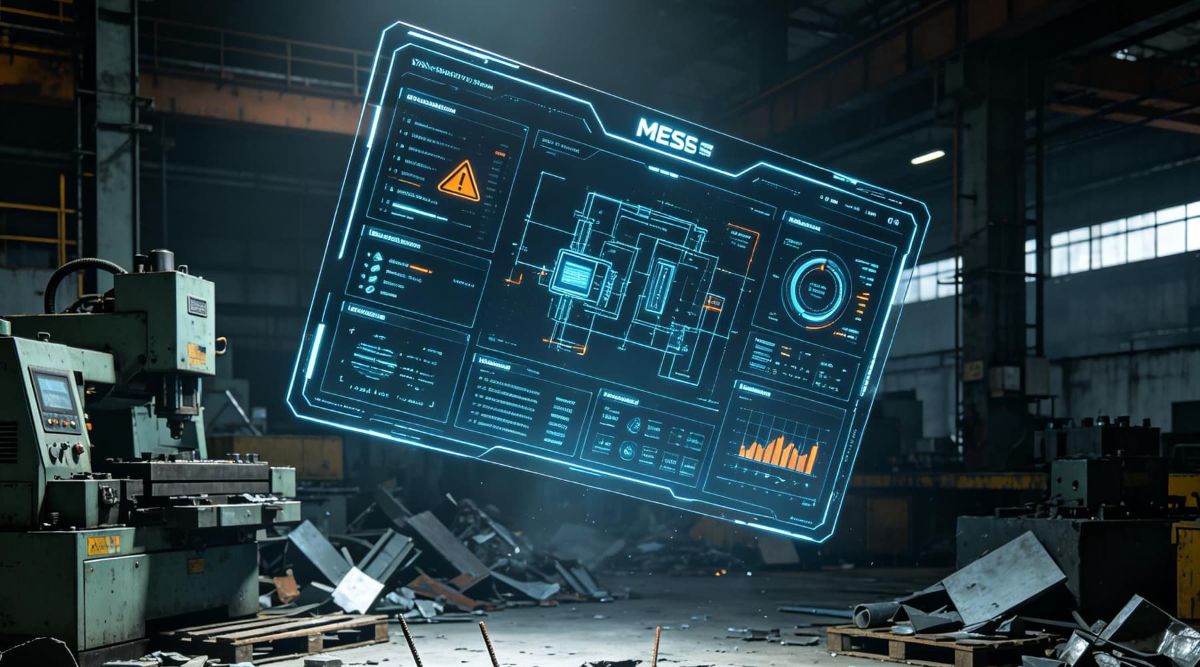
One MES does not fit all.
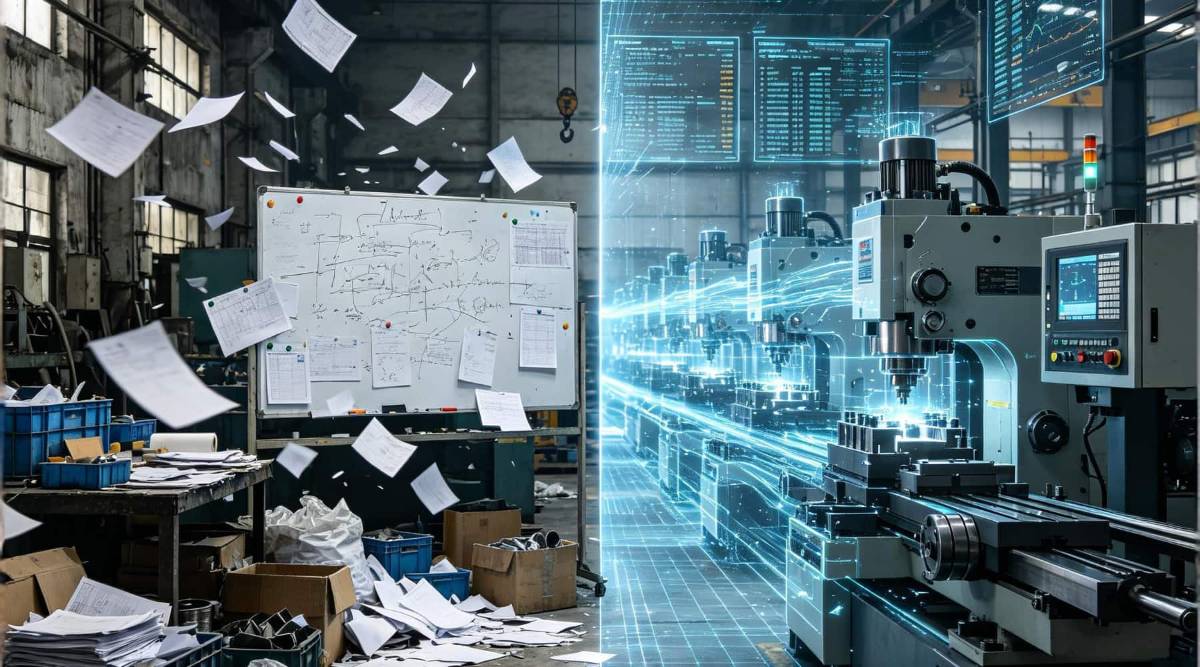
Many people assume that MES is just production management software — but once it's actually deployed, they realize that while machining and sheet metal fabrication both fall under discrete manufacturing, they face entirely different challenges. Machining requires the accumulation of process and equipment expertise, while sheet metal needs to solve the coordination between orders and production. Th
 Smart Manufacturing
Why is MES so difficult to implement?
On the surface, MES seems to be just a few functions — production reporting, quality traceability, and equipment data collection. Yet in practice, implementation often takes six months, a year, or even longer. Why? Because the hardest part of MES has never been software development. It is the challenge of truly translating a factory that runs on people, experience, and Excel spreadsheets into a co
 Smart Manufacturing
In the future, who will be operating the software?
Four trillion is just the surface. What truly deserves attention is that industrial software is evolving from "providing information to people" to "getting tasks done on behalf of people." In the future, it may no longer be about humans operating MES, ERP, and equipment systems — instead, humans will direct agents, and the agents will operate the software, call on systems, and execute tasks. The n
 Smart Manufacturing
Integrated Computing and Control — The Next-Generation Standard Architecture for Industrial Control Systems
In the past, PLCs handled control, industrial PCs handled vision, and servers handled AI — but the coordination among these multiple devices has become increasingly complex. Today, integrated computing and control is emerging as the new direction. The real challenge is not just putting AI into a PLC, but ensuring that real-time control and AI inference can coexist stably over the long term. This i
 Smart Manufacturing
The next battleground for industrial AI is not large language models — it's industrial agents.
Once large language models enter the industrial domain, the real opportunity lies not in conversation, but in task execution. Spanning data, knowledge, and processes, industrial agents are emerging as the new gateway connecting AI to the shop floor. The Siemens Industrial AI Agent Development Platform embodies this very trend: the future of industrial software is moving from passive management sup
 Jiuze Perspectives
For a sheet metal factory, have you ever thought about this question
Many people think that digitalization is just about entering orders into an ERP system and dispatching work orders to MES. In reality, the real challenge is making sure that a customer's order is truly understood by the entire factory. The order speaks the customer's language; the production task speaks the factory's language. And the first thing digitalization must do is to translate between
 Jiuze Perspectives
Building an agent isn't the hard part—the hard part is getting it to truly work in real industrial settings.
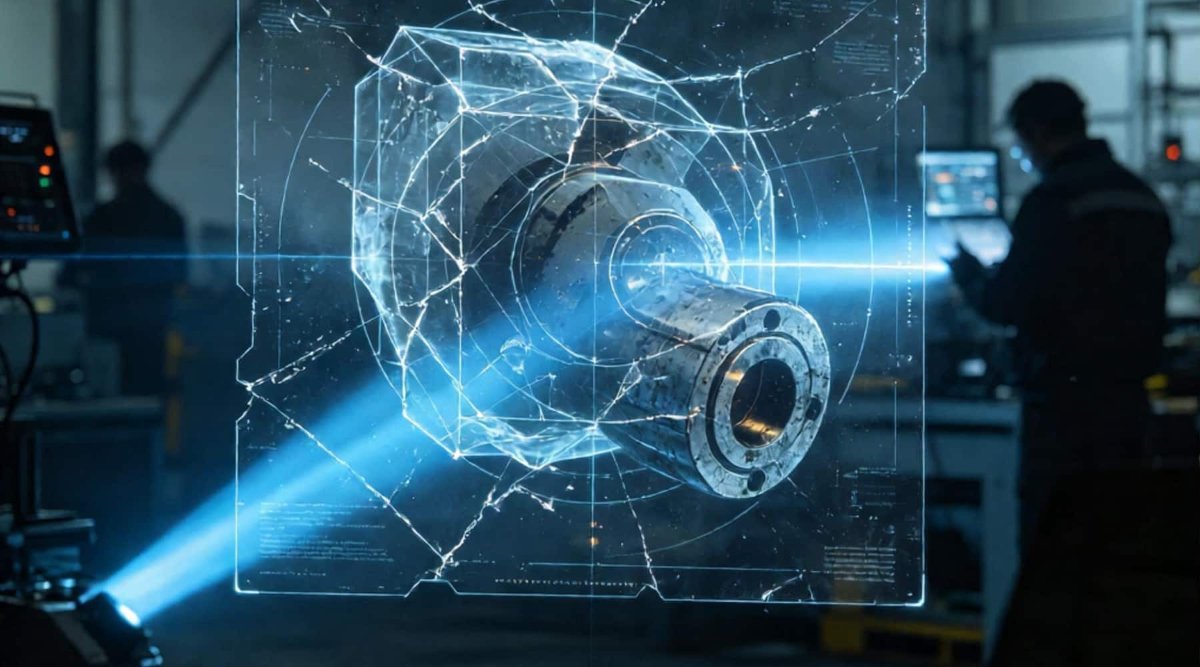
Many enterprises developing AI Agents find themselves stuck at the demo stage. The real challenge in industrial AI is not building an Agent — it's making it understand enterprise knowledge, connect to industrial data, execute business processes, and truly operate within a production environment. The Siemens Industrial AI Agent Development Platform is precisely addressing this very challenge. @Siem
 Knowledge Base
Germany's Industry 4.0 "Restart": The future of manufacturing competition is no longer about machinery — it's about industrial knowledge.
Germany is recalibrating its Industry 4.0 platform — and behind this move is not a simple rush to catch the AI wave, but a realization that over the past decade of digitalization, a critical issue has emerged: data is piling up, yet industrial know-how has not been truly captured and retained. Going forward, the core of manufacturing competitiveness will shift from equipment and system connectivit
Follow @工业软件老宋
Scan to follow on WeChat Channels and Douyin
 ChannelsWeChat scan
 DouyinDouyin scan