

What exactly keeps a sheet metal factory running?
From the moment a customer places an order to its final delivery, what unfolds behind the scenes is a complex interplay across multiple threads — order management, process engineering, production planning, materials, manufacturing execution, equipment, and logistics. A change in any one of these threads can ripple through the entire factory. The true first step toward digitalization in a sheet met
An order has already been scheduled into the plan,
but why does the boss only discover the day before delivery that it cannot be delivered?
You ask planning: "Wasn't it scheduled already?"
Planning says: "Yes."
You ask the workshop: "Aren't they all in production?"
The workshop says: "A few parts haven't come out yet."
You ask the warehouse: "What about the materials?"
The warehouse says: "We have the materials."
So why can't it be delivered?
This is what makes sheet metal factories truly difficult to manage.
Because you think you are managing "production,"
but in reality, you are managing several parallel lines every day.
Order is one line.
What did the customer order? When is the delivery date? What quantity? Which parts must be delivered together?
✦ Then, as the order moves down, it becomes the process line.
How are these parts made? Cut first or punch first? Which machine does the bending? Which need welding? Which need to be outsourced?
✦ After the process is determined, it enters the planning line.
With so many orders, which one should be done first? Which machine? When? When an urgent order is inserted, does the entire plan need to be rescheduled?
But planning is not the end.
✦ Because there is also the material line.
Have the materials arrived? Is there enough sheet metal? Are the previously completed parts all ready?
If just one critical part is missing, this order may not be deliverable.
✦ Then there is the production and equipment line.
Is the equipment available?
That does not mean it can start right away. Maybe the program is not ready, maybe the tooling has not arrived, maybe the material is not there, or maybe the previous process has not even been completed.
✦ Finally, there is one line that is often overlooked: the logistics line.
Where exactly are the parts?
After cutting is completed, where are they sent?
After bending is done, have they been delivered to welding?
A part may move around the workshop three or four times. If no one can tell exactly where it is right now, even the best plan is useless.
At this point, you discover a very interesting thing:
An order does not move forward along a single line.
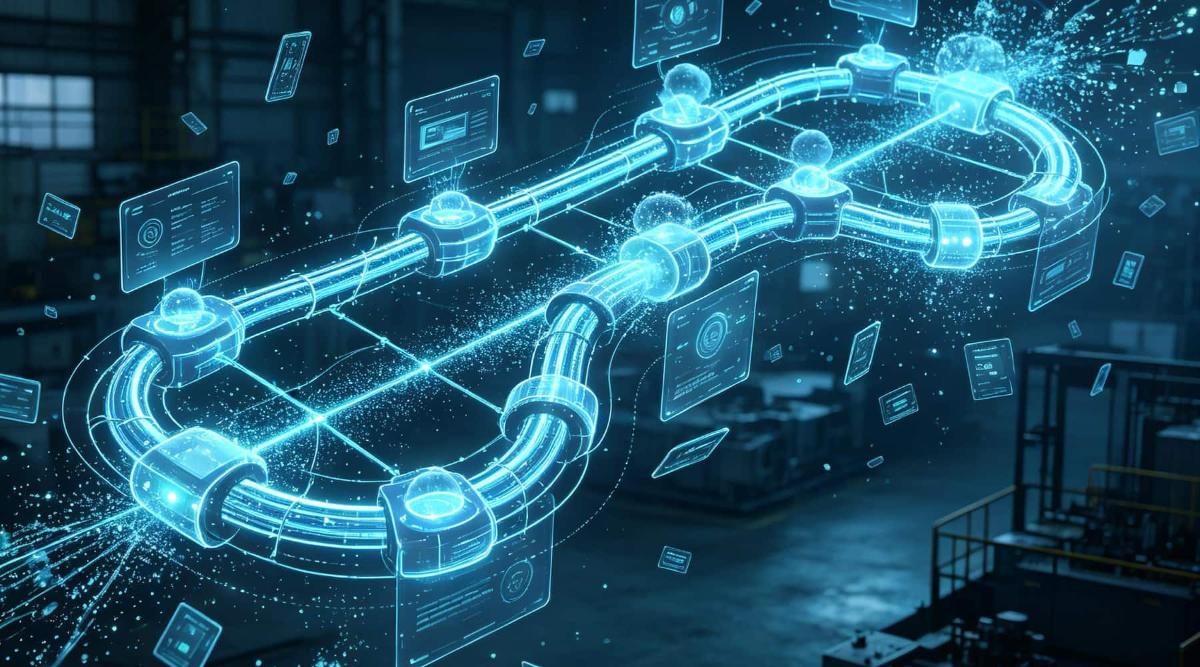
It is like a rope, simultaneously pulling on order, process, planning, materials, equipment, production, and logistics.
When any one strand moves, all the others are affected.
The customer suddenly asks for delivery three days earlier.
Order changes → Does the plan need to change? → Plan changes → Do materials need to be reprepared? → Materials change → Do cutting and bending need to be adjusted? → Production changes → Equipment load changes again.
The final impact may affect a dozen other orders.
01Why No Single System Can Provide a Complete Answer
Looking back at the digitalisation projects in many sheet metal companies,
the problem becomes clear.
ERP manages orders, MES manages production, APS manages scheduling, WMS manages the warehouse, and equipment systems manage machines.
None of these systems are wrong.
But what the boss really wants to know is: "Can my order be delivered three days from now?"
This question often cannot be fully answered by any single system.
Why?
Because order, process, planning, materials, production, and logistics are all one single thing.In the past, we broke it down into different departments,and later, we broke it down into different software systems.
02True Digitalisation of a Sheet Metal Factory
So the true digitalisation of a sheet metal factory
is not about buying a few systems first.
It is about first understanding one question:
What actually makes this factory run?What are the underlying core threads?How do these threads interact with each other?
This is the purpose of the upcoming series:
"The Digital Backbone of a Sheet Metal Factory."
It will break down a sheet metal factory layer by layer.
Starting from the very front – the order – all the way through product, process, planning, materials, production, logistics, quality, and delivery.
Then these lines will be reconnected.
Finally, an even more important question will be examined:
When AI truly enters the sheet metal factory, on what kind of data and business backbone should it be built?
The next chapter starts from the very beginning:
How does a customer order get transformed step by step into production tasks in the factory?