

AI真正淘汰的,可能不是职业,而是劳动
What AI truly disrupts may not be any single job, but "labor" itself. When knowledge, skills, and execution can all be called upon by AI, "being able to do the work" is becoming less scarce. What matters most may not be how much you can do, but whether you can decide what's worth doing, why, and how much to let AI do for you. #AIEra #AIJobs #FutureOfWork #TechTrends
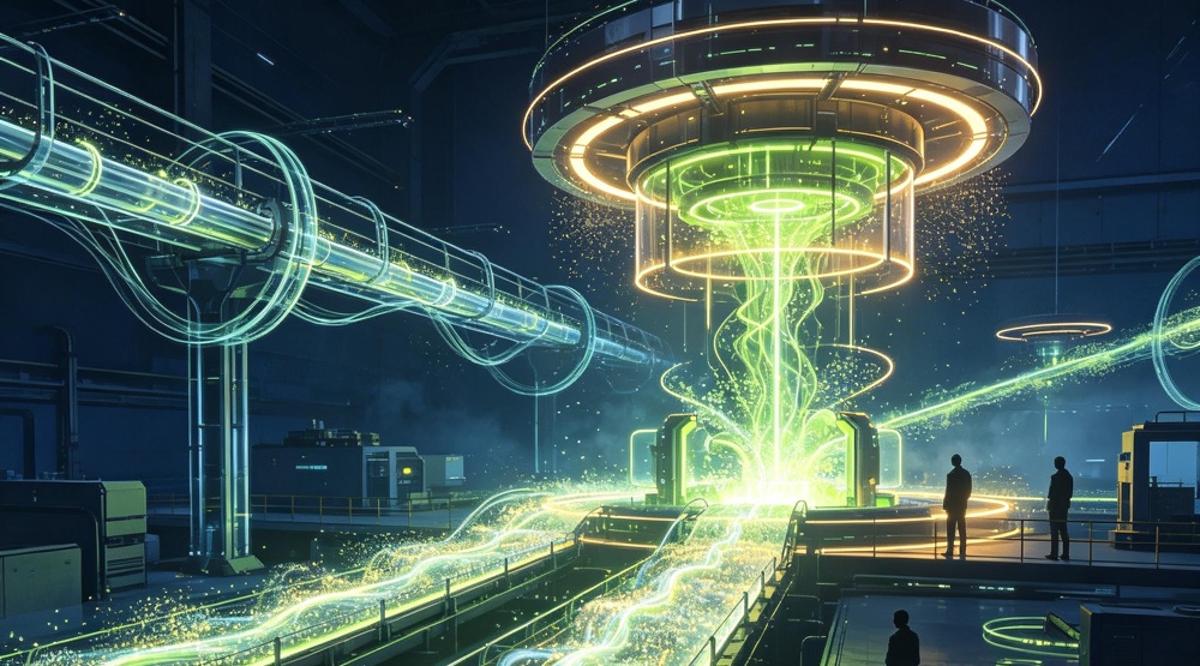
You think AI will take away your job?
It may not be that simple.
What AI truly aims to eliminate may not be a particular profession, but "labour" itself.
Why is that?
In the past, we judged a person's value by three things:
how much you know, what skills you have, and how much work you can do.
Engineers who can write code are valuable.
Designers who can design are valuable.
Copywriters who can write articles are valuable.
Accountants who can produce reports are valuable.
Lawyers who can draft contracts are valuable.
Essentially, all of them:
use their knowledge and skills to complete a piece of work in exchange for income.
But what is AI doing?
It is not just replacing a particular position.
It is turning vast amounts of knowledge, skills, and execution capability into infrastructure that can be called upon.
Previously, a programmer might need years to master a complex technology.
Now, an AI Agent can generate code, test it, modify it, and deploy it in minutes.
Previously, writing a professional article required research, structuring, writing, and revising.
Now, a model can do it in seconds.
Previously, a company needed a team for design, video, and copywriting.
In the future, one person plus a few Agents may accomplish the workload of an entire team.
So what is really changing here?
It is not that programmers have disappeared.
Rather, it is:
"Writing code" itself is depreciating.
Likewise,
it is not that designers have disappeared.
Rather, it is:
"Producing an image" is depreciating.
It is not that copywriters have disappeared.
Rather, it is:
"Writing an article" is depreciating.
You will notice a very brutal rule:
Any labour that can be standardised, digitised, processised, and verified will increasingly be taken over by AI.
And the most frightening part is this:
It does not need to replace 100% of your work.
As long as AI can replace 60%, 70%, or 80% of your workload,
companies will rethink:
If we needed 10 people before, do we now only need 3?
This is the real impact of AI on employment.
So the most dangerous question in the future may not be:
"Will AI replace my profession?"
But rather:
Within my profession, how much of the work is actually just "labour"?
If your value mainly comes from:
copying, organising, writing, calculating, analysing, executing…
then you must be vigilant.
Because these capabilities are rapidly becoming AI's foundational capabilities.
But there is a very important logic here.
AI eliminating labour does not mean AI eliminating people.
On the contrary.
As "doing work" becomes cheaper and cheaper,
what becomes truly expensive may be:
Judgment.
Choice.
Creating goals.
Taking responsibility.
In other words,
in the past we competed on:
"How much work can I do."
In the future, we may compete on:
"How much work can I get AI to do for me, while deciding what is worth doing."
This is the true watershed of the AI era.
So, if you are still asking:
"Will AI take away my job?"
It is advisable to change the question:
"Which parts of my job are becoming AI's foundational capabilities?"
Because what should truly be eliminated
may not be you.
It is the way of working you once relied on to prove your value.
And this is just the beginning.
In the next episode, we dig deeper:
When AI can produce 1 million articles and 1 million videos a day –
is content still valuable?