

Germany's Industry 4.0 "Restart": The future of manufacturing competition is no longer about machinery — it's about industrial knowledge.
Germany is recalibrating its Industry 4.0 platform — and behind this move is not a simple rush to catch the AI wave, but a realization that over the past decade of digitalization, a critical issue has emerged: data is piling up, yet industrial know-how has not been truly captured and retained. Going forward, the core of manufacturing competitiveness will shift from equipment and system connectivit
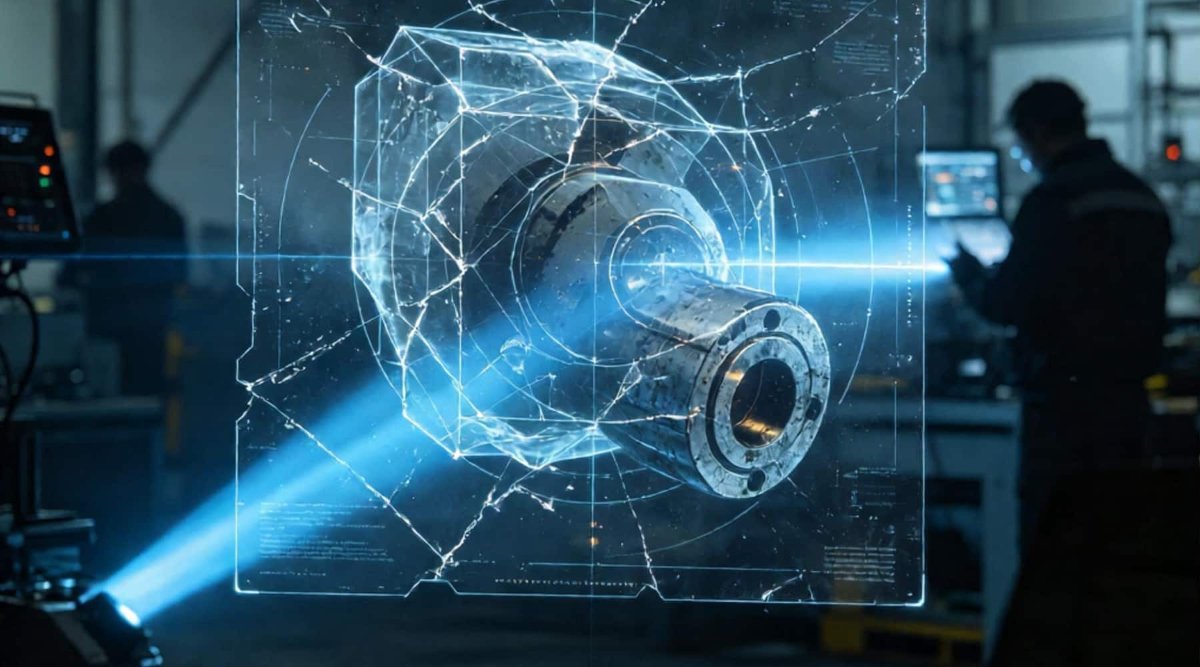
Germany has been working on Industry 4.0 for over a decade.
But recently, Germany did something that surprised many:
it restructured the Industry 4.0 platform.
The question arises:
If Industry 4.0 has been successful, why restructure it now?
The answer may run deeper than many imagine.
Over the past decade or so, Industry 4.0 solved one core problem:
connecting factories.
Equipment networking.
Data collection.
System integration.
Germany built a very complete industrial digitalisation framework.
But today, they have come to a realisation:
factories have more and more data, yet the true capability of enterprises has not grown in tandem.
Why?
Because the most valuable thing in manufacturing has never been the data itself.It is the experience hidden behind the data.
For example:
A master craftsman knows what sound indicates abnormal equipment behaviour.
A process engineer knows what a parameter change really means.
An equipment expert knows when preventive maintenance should be performed ahead of time.
What did these depend on in the past?
People.
Experience.
Decades of accumulated know-how.
But the problem is:
human experience cannot be replicated.
When people retire, the experience retires with them.
As the enterprise expands, experience becomes difficult to pass on.
This is the new challenge that manufacturing digitalisation faces today.
01The True Intent of the Restructuring: From AI Apps to Industrial Knowledge
So Germany's restructuring of Industry 4.0 is not simply about adding a few more AI applications.
Rather, it aims to build a new industrial capability:
To transform the experience that once relied on peopleinto industrial knowledge that can be deposited, shared, and reused.
This is also why Germany emphasises industrial data ecosystems, open architectures, and industry collaboration.
Because no single enterprise can accomplish this alone.
Industrial intelligence is not just a software company's business.
It requires the joint participation of equipment manufacturers, software vendors, and manufacturing enterprises.
02The Real Challenge of Industrial AI: Understanding Industry
This also explains why companies like Siemens and Trumpf are involved.
Because the greatest challenge in industrial AI is not algorithms.
It is understanding industry.
A model can write articles.
But it may not know:
why a machine tool vibrates?
why a process fails?
why a product experiences quality fluctuations?
What manufacturing needs is not general intelligence.
It is intelligence that understands industry.
03Implications for Chinese Manufacturing Enterprises
This shift also offers important lessons for Chinese manufacturing enterprises.
Over the past decade or so, digitalisation in Chinese manufacturing has mainly focused on:
whether we have systems,
whether we have data,
whether we have platforms.
But in the next phase, the questions enterprises truly need to address may be:
Can this data be turned into our own capability?Can this experience be retained and accumulated?Can this knowledge help us make better decisions?
Therefore, the restructuring of Industry 4.0 sends an important signal:
manufacturing digitalisation is entering its next phase.
The previous phase was about:
who connects more.
The next phase will be about:
who understands deeper.
Valuable industrial software in the future will not merely record production processes.
It will help enterprises turn decades of industrial accumulation into a continuously growing capability.
This may well be the true next stop for industrial digitalisation.